Data
FOMO Notifications as a Trading Signal
FOMO's notifications are what the platform amplifies to its users, from whale buys to daily recaps to aggregate multi-trader moves. That curation is a leading signal distinct from raw on-chain data, and the FOMO API serves it over REST and a realtime stream.
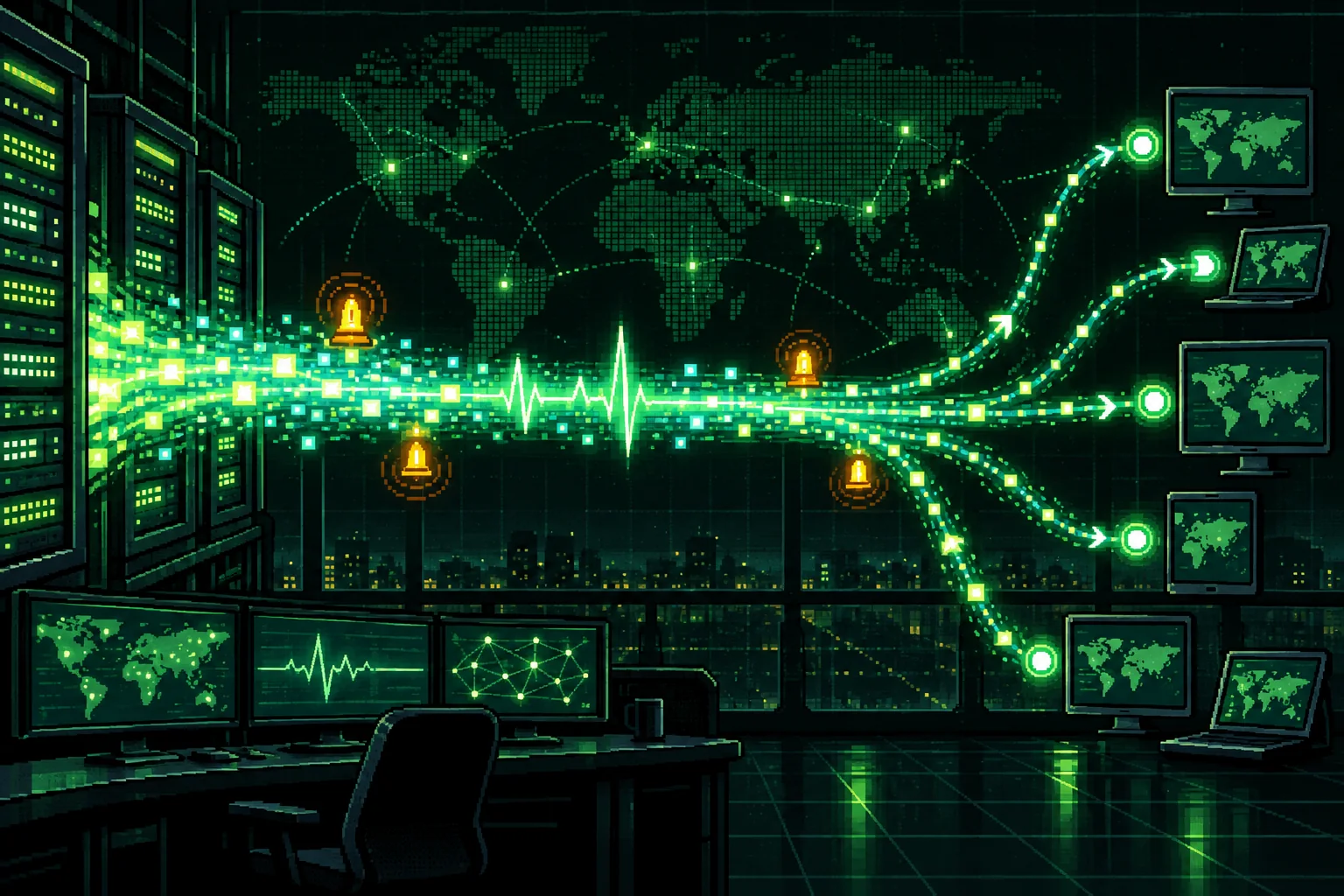
When FOMO pushes a notification, it does not go to one person. A single alert can hit thousands of phones at the same moment. For a memecoin, that is a wave of attention arriving all at once, and attention is what moves these markets. That makes the notification stream a datapoint, not just an app feature.
What FOMO actually pushes
FOMO does not push everything. It curates. The notifications that go out fall into a handful of types:
- Large buys and large sells: a notable trade just happened on a token.
- Trade comments and theses: a trader wrote something about a position.
- New listings: a token just got verified on FOMO.
- Price milestones: a token is up 2x since it listed.
- Aggregate moves: "40 traders sold" style alerts, where FOMO rolls up many traders into a single signal.
- Daily recaps: a summary of the market pushed out to users.
- New users joining: someone with a notable following just joined the platform.
Each of these is FOMO deciding that something is worth interrupting a user for. That decision is the signal.
Why the notification layer is different from on-chain data
Anyone can read the blockchain. A large buy is visible on-chain the moment it settles. But the chain does not tell you that FOMO just amplified that buy to its user base. The notification is the amplification, and amplification is what turns a quiet on-chain event into a crowd.
So the notification stream answers a question the chain cannot: not just what happened, but what the platform decided to put in front of people, and when.
Broadcast versus targeted
Not every notification has the same reach. Some are platform-wide. A daily recap or a new listing tends to go out broadly. Others are targeted, surfaced to the users most likely to care about that specific trader or token. Reading which is which tells you whether an alert is a broad attention event or a narrow one, and that changes how you weigh it.
The aggregate signal
The "N traders" style notifications are worth calling out on their own. When FOMO tells users that dozens of traders just bought or sold a token, it is compressing a lot of individual activity into one reading. That is momentum straight from the platform: not one whale, but a crowd moving together. On-chain you would have to reconstruct that from hundreds of separate transactions. In the notification, FOMO has already done the rollup.
Timing is part of the data
Because a notification is an event with a timestamp, the stream is not just what but when. The moment FOMO surfaces a token is the moment its user base gets the nudge. For fast markets, the lead time between that nudge and the price reaction is itself worth measuring.
How to access it — and what is actually available today
Be careful here, because the list above describes what FOMO pushes to phones, and not all of it reaches an API.
The large buys, large sells and theses come through FOMO's activity feed, which is what we relay:
curl "https://api.fomoapi.io/v2/alerts?limit=50" -H "authorization: Bearer YOUR_API_KEY"
The realtime stream at wss://api.fomoapi.io/ws/alerts pushes each event as it happens, and you can scope it to a single trader with ?trader= or ?userId= for copy-trading products. Every item carries the token and its contract, the chain, the type and the timing. The websocket costs no credits on any plan.
What is not available: price milestones, new-listing pushes, daily recaps, new-user joins and the aggregate "N traders" rollups were only ever readable from an off-device capture of the mobile push notifications. That capture is no longer running, and the /v2/notifications endpoint that served it was retired in September 2026 — it now answers 410 Gone. Those signals are real and the argument above still holds for them, but we cannot currently sell you access to them, and we would rather say so than serve you an empty array.
One more limit worth knowing before you build on the feed: it carries large trades only. Measured over 500 consecutive alerts, the smallest buy was $2,985 with nothing below $2,950 — a hard floor around $3,000 of position value, set by FOMO upstream of us. For complete per-token activity you need the on-chain stream or the per-token endpoints instead.
FOMO API is an independent, unofficial data layer for fomo.family. It is not affiliated with FOMO.
Ship on fomo.family trader data
Both-chain wallets, PnL and holdings, plus two live streams: the app feed on every plan, the on-chain stream on Growth. One API.
Get an API key