Data API
Token Holders: See Which Top Traders Hold a Coin
Instead of asking what a coin costs, ask who holds it. This how-to covers GET /token/{address}/holders to see which tracked traders hold a coin and their position sizes, and /v2/leaderboard/tokens/most-held to find the tokens most held across tracked traders, so you can gauge smart-money conviction.
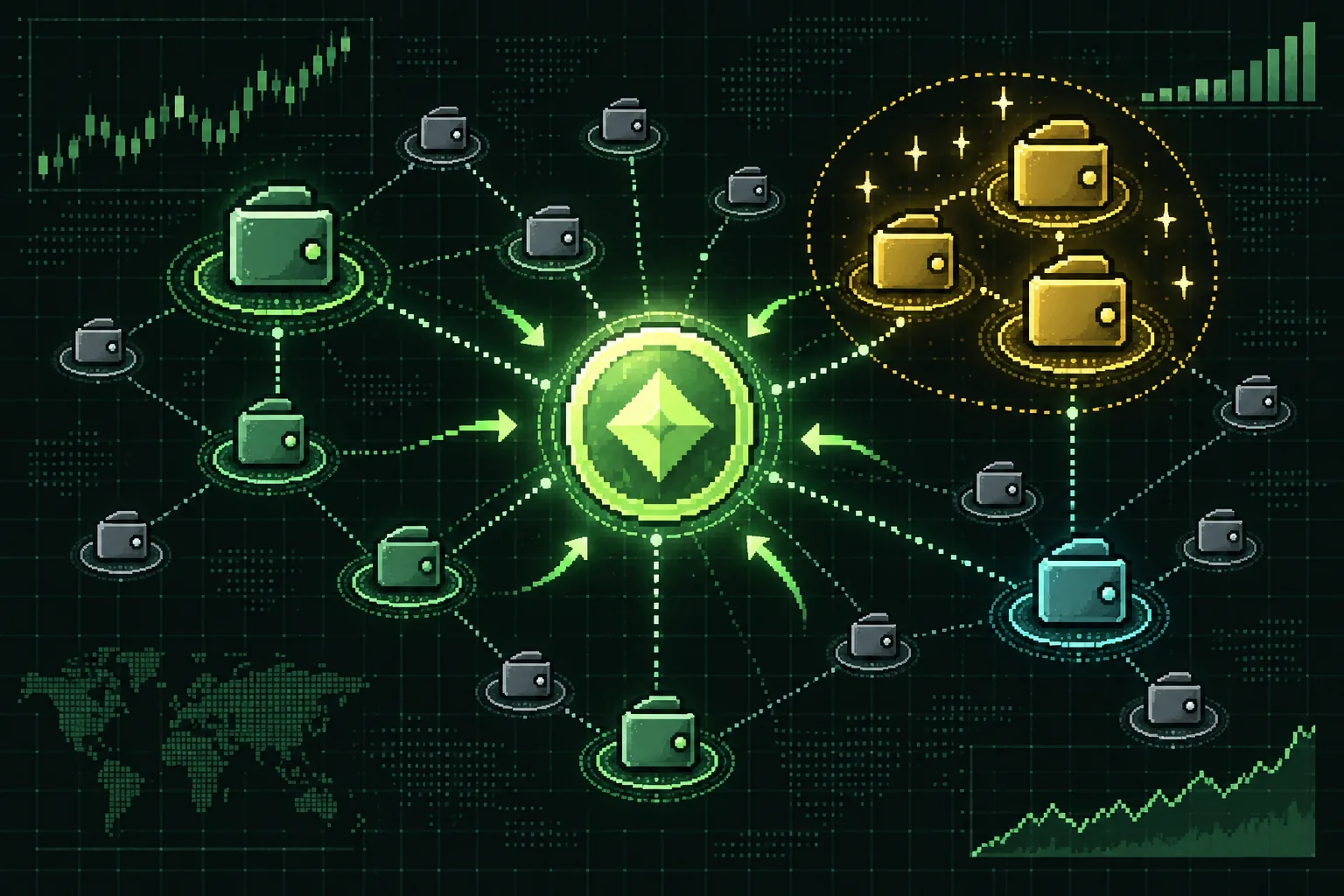
When you are looking at a memecoin, one of the more useful questions you can ask is not "what is the price" but "who is holding it." A coin held by a spread of traders with a real track record reads very differently from the same coin held only by wallets nobody has heard of. This post covers how to answer that question with the token holders API on fomoapi.io, using two endpoints: the holders of a specific token, and the tokens most held across the traders being tracked.
fomoapi.io captures social-trading data from the fomo.family app and exposes it over plain HTTP. It is an independent project and is not affiliated with fomo.family. Everything below runs on the free tier at https://api.fomoapi.io, which allows 250,000 credits a month.
What "holders" means here
The holders endpoint does not return every wallet on chain that touches the token. It returns the tracked traders who currently hold it, along with how much they hold. That framing is the point. Anyone can see raw on-chain holders with a block explorer. What you usually cannot see at a glance is which of those holders are traders with a history worth weighting. This endpoint answers that directly.
Get the holders of a token
Pass the token's address as a path parameter.
curl -s "https://api.fomoapi.io/token/9BB6NFEcjBCtnNLFko2FqVQBq8HHM13kCyYcdQbgpump/holders" \
  | jq '.holders[] | {handle, value_usd: .valueUsd, amount}'
A trimmed response:
{
  "token": {
    "address": "9BB6NFEcjBCtnNLFko2FqVQBq8HHM13kCyYcdQbgpump",
    "symbol": "EXMPL",
    "holder_count": 9
  },
  "holders": [
    {
      "trader": { "handle": "soltrader", "id": "u_8842", "rank": 12 },
      "amount": 4210000,
      "value_usd": 8420.55,
      "first_bought": "2026-08-26T22:10:03Z"
    },
    {
      "trader": { "handle": "degenmap", "id": "u_2290", "rank": 47 },
      "amount": 1180000,
      "value_usd": 2361.00,
      "first_bought": "2026-08-27T09:48:19Z"
    }
  ]
}
Each holder record carries the trader, the amount held, an approximate USD value, and when they first bought. That combination is what lets you read conviction rather than just count wallets. A holder who bought early and still holds a sizeable position is a stronger signal than a wallet holding dust. Sorting the holders array by valueUsd and looking at who sits at the top gives you a quick read on whether real money is behind the coin.
Two reads are useful right away:
- Concentration. If most of the value sits in one or two wallets, the coin is thin and exposed to a single seller. If it is spread across many holders with records, that is a broader base.
- Timing. The
first_boughttimestamps tell you whether the tracked traders got in early or piled in after a move. Early entries from strong traders are a different signal than late entries from the same group.
Find the tokens most held across tracked traders
The other direction is just as useful. Instead of starting with a coin and asking who holds it, you start with the whole set of tracked traders and ask what they hold in common. The most-held endpoint ranks tokens by how many tracked traders hold each one.
curl -s "https://api.fomoapi.io/v2/leaderboard/tokens/most-held?limit=25" \
  | jq '.tokens[] | {symbol: .symbol, holders: .holder_count, mint: .address}'
{
  "tokens": [
    {
      "address": "9BB6NFEcjBCtnNLFko2FqVQBq8HHM13kCyYcdQbgpump",
      "symbol": "EXMPL",
      "holder_count": 9,
      "total_value_usd": 41230.10
    },
    {
      "address": "7pTqZ...bonk",
      "symbol": "CATZ",
      "holder_count": 7,
      "total_value_usd": 22890.44
    }
  ]
}
This is a way to gauge where smart-money conviction is pooling without knowing which coin to look at first. A token near the top of this list is one that many tracked traders independently decided to hold. Cross-referencing those holders against the leaderboard lets you separate a coin held by a broad but unremarkable group from one held by a smaller set of traders with stronger records. Both are informative; they just mean different things.
Putting the two together
The two endpoints work as a funnel. Use most-held to surface the coins that many tracked traders are in, then use the per-token holders call to inspect any one of them in detail.
- Call
/v2/leaderboard/tokens/most-heldto get the coins with the widest holding across tracked traders. - Pick the ones where the holder count and the total value held are both meaningful, not just one of them.
- For each candidate, call
/token/{address}/holdersto see the actual holders, their position sizes, and when they entered. - Judge conviction from the detail: are the strong traders early and sizeable, or late and small?
If you have a name or ticker rather than an address, resolve it first with /v2/search?q=, which returns both traders and tokens, then feed the mint into the holders call.
Weighting holders against the leaderboard
The holder list on its own is a shortcut, but you can go further by cross-referencing the trader leaderboard for a chosen window. The leaderboard endpoint takes a window parameter and returns tracked traders ranked over that period.
curl -s "https://api.fomoapi.io/v2/leaderboard/7d?limit=100" \
  | jq '.traders[] | {handle: .handle, id: .id, pnl_usd: .pnl_usd, rank: .rank}'
Pull the leaderboard once, keep the trader ids in a set, and then check the holders of a coin against it. A coin whose holders include several traders near the top of the last seven days is a stronger read than one held by traders who rank well over a longer, staler window but have gone quiet recently. Matching holders to a recent leaderboard is a simple way to bias your conviction read toward traders who are performing now, not traders who performed a year ago. Because the holders response already carries each trader's id, joining the two datasets is a straight lookup and costs you one extra request.
Reading the signal honestly
A holder list is a snapshot, not a prediction. Traders sell, and a strong holder today can be gone tomorrow. Position value is approximate and moves with price. And a coin being widely held by tracked traders tells you where attention is, not that the coin will go up. The honest use of this data is to size up conviction and concentration, then decide for yourself, rather than to treat the presence of a known trader as a buy signal.
Used that way, the token holders API answers a question the chart cannot: of the people whose records you can actually check, who is in this coin, how much, and since when.
Getting started
Both endpoints are live on the free tier at https://api.fomoapi.io with a 60 request per minute limit. Start with /v2/leaderboard/tokens/most-held to see what the tracked set is holding right now, then drill into any coin with /token/{address}/holders. For a specific coin you already have in mind, resolve it with /v2/search?q= and go straight to the holders call.
Ship on fomo.family trader data
Both-chain wallets, PnL and holdings, plus two live streams: the app feed on every plan, the on-chain stream on Growth. One API.
Get an API key