Guides
The FOMO Family API: How to Get fomo.family Data
A complete reference to the FOMO Family API: every data type fomoapi.io exposes for fomo.family, from handle-to-wallet resolution and verified PnL through trades, holdings, written theses, leaderboards, token holders and two realtime WebSocket streams, each with the endpoint that returns it and what it costs in credits.
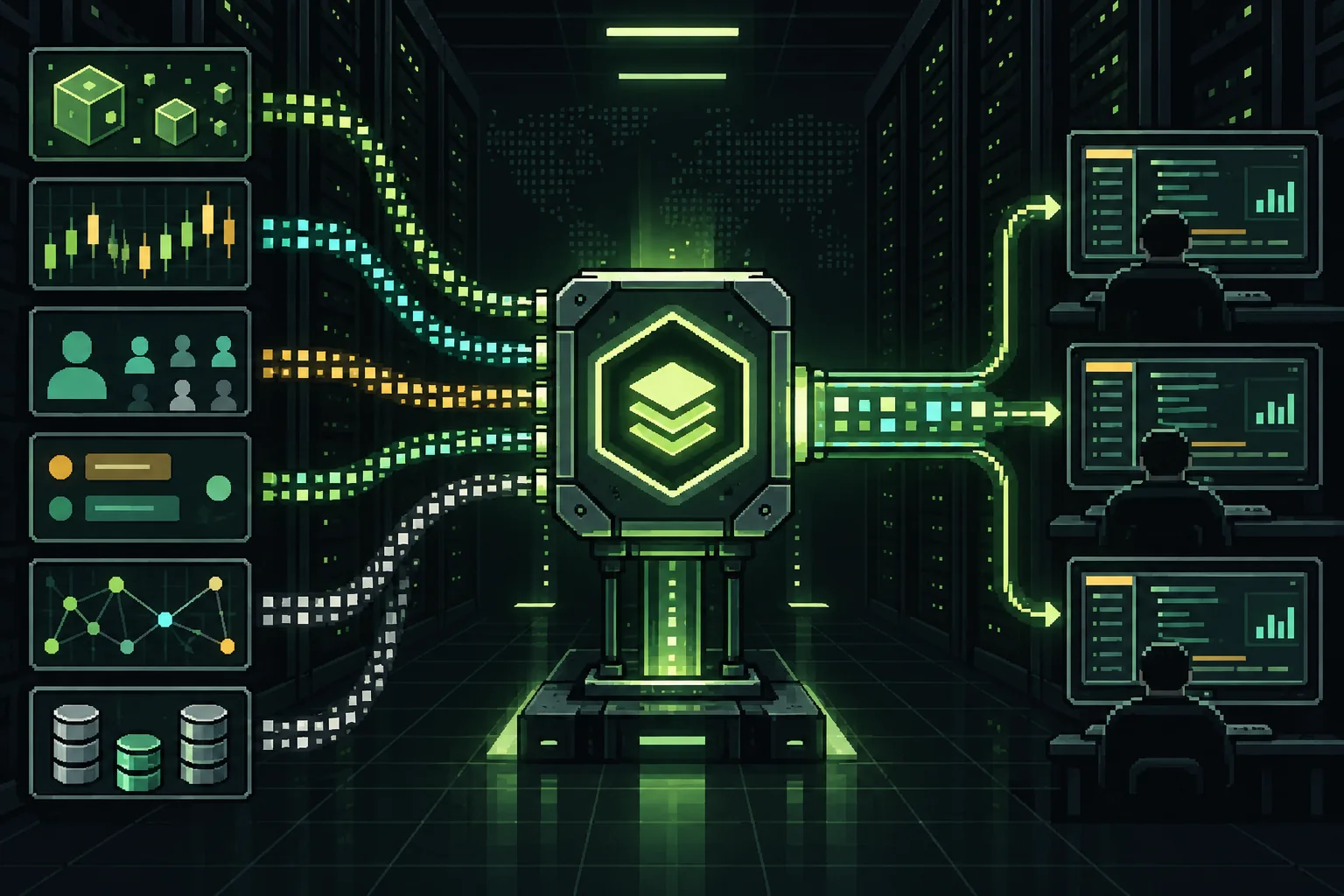
fomo.family is a social crypto trading app where traders post their buys, their sells and the reasoning behind them across several chains. There is no official public API for any of it. The FOMO Family API (fomoapi.io) is an independent data layer that exposes that data over plain REST and JSON from a single key, plus two realtime WebSocket streams.
This is the complete reference: every data type the FOMO Family API returns, the endpoint that gives it to you, and what it costs in credits.
Why fomo.family has no official API
The app publishes a lot in its interface. Follower counts, trade counts, leaderboard positions and written theses are all visible to anyone. What it does not publish is a machine-readable version of any of it, or the wallet addresses that would let you verify the numbers independently.
That gap is the reason this API exists. Everything here is read from fomo.family and from the chains its traders trade on, then normalized into stable JSON. The FOMO Family API is independent and unofficial. It is not affiliated with fomo.family.
Authentication and your first call
Base URL is https://api.fomoapi.io. Every data endpoint is a plain GET and takes your key as a bearer token.
curl "https://api.fomoapi.io/v2/leaderboard/24h?limit=5" \
  -H "authorization: Bearer YOUR_API_KEY"
Sign in at the dashboard with an email code and a free key is minted for you automatically. Public service-information endpoints such as /health and /v1 do not require a key. Data endpoints, including cached leaderboards and /v2/alerts, require your API key.
From a handle to both wallets
Every trader on fomo.family has a handle. One call resolves it to both on-chain wallets and the full profile behind them:
curl "https://api.fomoapi.io/v2/users/<handle>" \
  -H "authorization: Bearer YOUR_API_KEY"
You get wallets.solana and wallets.evm, FOMO-reported multi-window PnL, live holdings, follower count, top tokens and account age. The EVM address is the same across Base, BNB Chain, Ethereum and Robinhood Chain, so one call covers every EVM venue a trader touches.
This handle-to-wallet resolution is the part of the FOMO Family API that most builds start with, because the app itself never shows a wallet address. It is covered in depth in Resolve Any FOMO Handle to a Wallet, and compared against the free browser tool in Fomo Wallet Finder vs the FOMO API.
If a trader has not been resolved yet, wallets comes back as {"status":"resolving"}. Query again shortly rather than treating it as a miss.
PnL, and why it can be checked
The pnl object carries a figure for each window: 24h, 7d, 30d and all. The wallets are attached to the same object, which is the point. A PnL number you cannot trace to an address is a screenshot; one with the wallet next to it can be recomputed by anyone from public chain data.
Compare time windows with A FOMO Trader's Real Track Record: 24h to All-Time. PnL is reported by FOMO, not independently recomputed by this API.
Trades and live holdings
For entry and exit history, use trades. For what a trader holds right now, use balances.
curl "https://api.fomoapi.io/v2/users/<handle>/positions?limit=50" \
  -H "authorization: Bearer YOUR_API_KEY"
Each trade carries token, side, sizeUsd, realizedPnlUsd, chainId, chain and a timestamp, and where the trader wrote one, the thesis attached to that specific trade. GET /v2/users/{handle}/balances returns live holdings[] with per-token value and 24 hour change, plus perp PnL where present.
The theses behind the trades
This is the data that exists nowhere on-chain. Traders on fomo.family attach written reasoning to their trades, and that text is often the earliest signal that a narrative is forming.
GET /v2/thesis/token/{mint}returns every thesis written about one coin.GET /v2/thesis/user/{id}returns one trader's theses.
Add ?chain=robinhood to scope to Robinhood Chain (chainId 4663), currently the largest share of thesis volume on the app.
Leaderboards and token boards
GET /v2/leaderboard/24h | 7d | 30d | all
GET /v2/leaderboard/tokens/trending
The trader leaderboard ranks by FOMO-reported PnL over the window and returns both wallets per trader, so a leaderboard row is immediately checkable. The token board mirrors FOMO's own ordering exactly, so a row sits at the same rank FOMO shows it at.
Leaderboard endpoints are cached, require an API key, and consume credits at the rates shown on the pricing page.
Token holders and the ownership graph
GET /v2/tokens/{mint}/holders answers the question that turns a coin into a thesis: which tracked traders hold this, and how much. Combined with the thesis feed, you get both what people own and why they say they own it.
Realtime: two separate streams
These are different products and it is worth keeping them straight.
/ws/alerts |
/ws/trades |
|
|---|---|---|
| Source | the app feed | the chain directly |
| Timing | arrives with the app | roughly 15s earlier |
| Plans | every plan | Growth and Scale |
wss://api.fomoapi.io/ws/alerts?key=YOUR_API_KEY
Connect and you receive a welcome frame, then alert events carrying the trader, token symbol, tokenAddress, chainId and side. Follow one trader with ?trader=<handle>, or filter with ?chain=, ?token=, ?type=.
The on-chain stream reads the same trades off the chain rather than from the app feed, which is why it lands earlier. If you are building anything that acts on a trade, that gap is the whole game. See Subscribe to One Trader Over WebSocket.
Credits and plans
Every data request requires an API key. Create a free key in the dashboard, then send authorization: Bearer YOUR_API_KEY.
Usage is metered in credits, and endpoints have different costs. A monthly credit allowance is not a fixed number of requests. See the pricing page for current credit allowances, endpoint costs, subscriptions, and optional prepaid payment methods. Use the API reference for response headers and rate limits.
The app-feed stream at /ws/alerts is separate from the on-chain stream at /ws/trades. Free keys receive an initial realtime app-feed trial, followed by a delay; paid keys receive the realtime app feed. The on-chain stream requires Growth or Scale. See the docs for current timing and access rules.
What people build with it
The common patterns, roughly in order of how often they come up:
- Copy-trading bots. Resolve a handle, subscribe to that trader on the WebSocket, act on the fills. See How to Build a Copy-Trading Bot.
- Leaderboard and track-record dashboards that show PnL with the wallet beside it.
- Narrative detection, reading the thesis feed for coins several credible traders start writing about at once.
- Agents and research tools that answer questions about traders in natural language and need a factual backend.
Getting started
Create a free key in the dashboard, then make an authenticated request:
curl "https://api.fomoapi.io/v2/leaderboard/24h?limit=3" \
  -H "authorization: Bearer YOUR_API_KEY"
Full endpoint reference is in the API docs.
Ship on fomo.family trader data
Both-chain wallets, PnL and holdings, plus two live streams: the app feed on every plan, the on-chain stream on Growth. One API.
Get an API key