FOMO Guides
What Is fomo.family? A Guide to the Social Trading App
fomo.family is a social trading app organized around trader profiles, public activity, theses, leaderboards, and following other market participants.
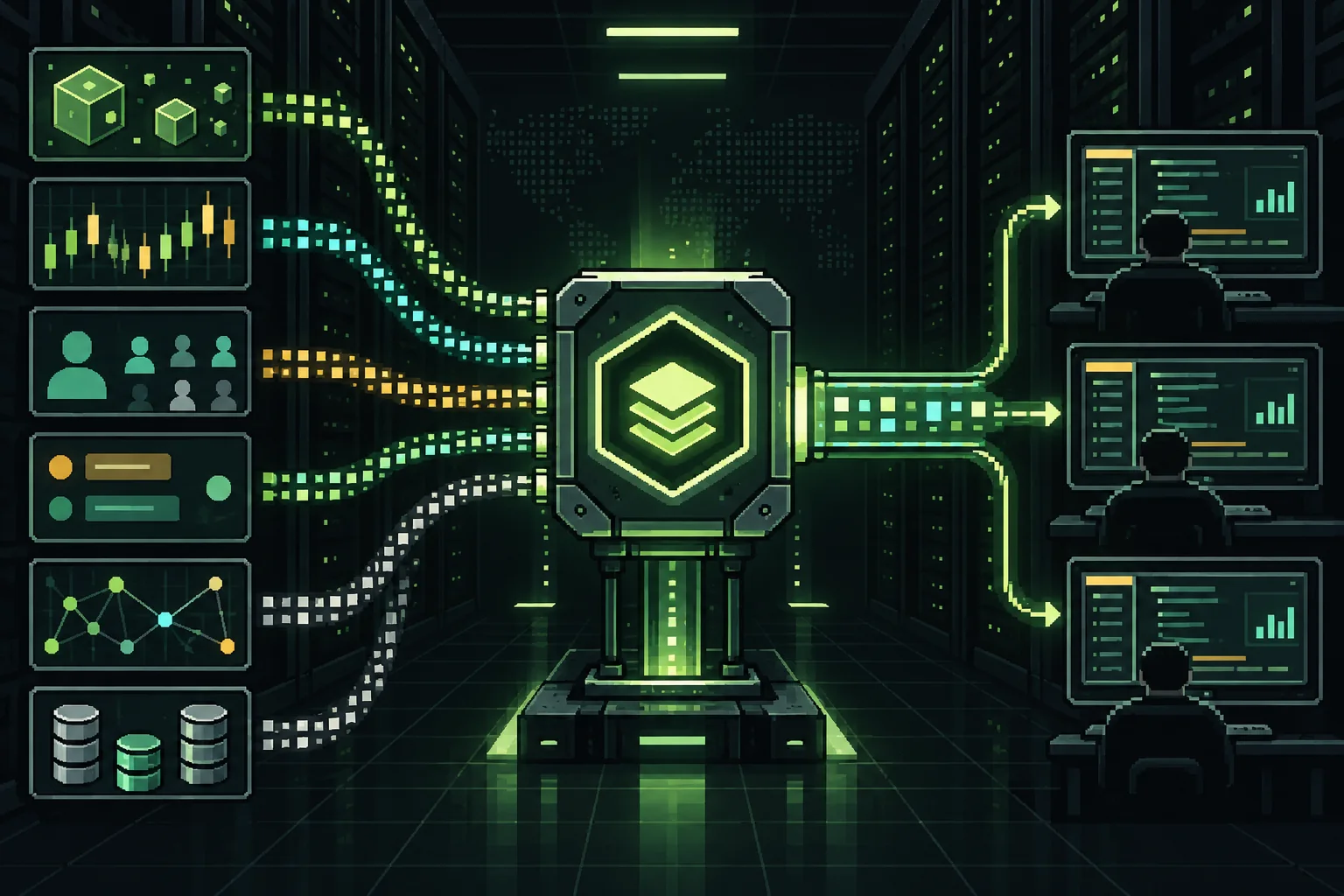
fomo.family is a social trading app that organizes market activity around people. Instead of showing only token charts and anonymous addresses, it gives traders profiles, public activity, theses, following relationships, and performance views.
That social layer is the main idea. A user can discover a trader, inspect the track record FOMO reports for that account, follow what the trader posts, and see new activity in a feed. Developers can use an independent data layer to bring parts of that experience into research tools, alerts, and dashboards.
FOMO API is not the fomo.family app and is not affiliated with it. The FOMO Family API overview explains the developer integration; this page explains the product concepts a new reader encounters.
Trader profiles
A FOMO profile is the identity at the center of the app. It can include a handle, display name, verification state, followers, performance windows, volume, trade count, account age, and other public account fields.
For a developer, the important rule is that a display handle and a stable identifier serve different purposes. Handles are useful for search and URLs, but they can change. Store stable user IDs when they are available, and treat a missing wallet or profile field as explicit state.
The independent API route GET /v2/users/{handle} resolves a handle to the profile and available Solana and EVM wallets. It does not make every historical trade complete by implication.
Activity feed
The activity feed is where social context becomes timely. It can contain buys, sells, theses, transfers, listings, milestones, and push-derived events. That makes it useful for more than a transaction table: a reader can see who acted, what asset was involved, and what type of event occurred.
FOMO API exposes recent app-feed activity through GET /v2/alerts and the /ws/alerts WebSocket. A WebSocket is useful when an application needs pushed updates. REST is useful for initial loading and bounded recovery.
Events are inputs, not recommendations. A buy alert does not tell you whether the price moved, whether liquidity is sufficient, or whether copying it fits another user's risk limits.
Theses add the why
A thesis is the explanation a trader attaches to an idea or position. That context can help a research product separate raw activity from stated reasoning.
The route GET /v2/thesis/user/{id} returns thesis data available for a user. Applications should preserve the author and timestamps and should not present a thesis as an independently verified fact. It is the trader's stated reasoning.
Leaderboards organize discovery
Leaderboards make it easier to find accounts for further research. The documented route GET /v2/leaderboard/{window} supports performance windows such as 24 hours, 7 days, 30 days, and all time.
The selected window matters. A trader near the top of a short window may not have the same results over a longer period. Products should display the window and metrics rather than reducing the ranking to a permanent label like “best trader.”
Following and copy-trading
Following turns profiles into a personalized feed. Copy-trading goes further: an external system watches selected activity and decides whether to create a corresponding transaction.
Those are not the same action. Following is a social product feature. Automated execution needs separate controls for sizing, liquidity, slippage, supported chains, token validation, duplicate events, and failure handling. FOMO data can be one signal in that system, but it should not bypass the execution layer's risk rules.
What developers can build
The social model supports several useful products:
- a profile search that resolves a handle and shows the performance fields currently available;
- a watchlist that stores stable user IDs and follows new feed events;
- a thesis reader that connects stated reasoning to a trader and token;
- a leaderboard explorer that compares several time windows;
- an alert bot filtered by trader, token, chain, or event type;
- a portfolio view that keeps current balances separate from bounded position history.
Start with the API documentation and keep the key on your server. If the first task is identity resolution, the handle-to-wallet guide explains the route and its limitations.
In short, fomo.family is a people-centered trading feed: profiles provide identity, public activity provides recency, theses provide stated context, and leaderboards provide discovery. The independent API makes those documented data surfaces usable in software while preserving the boundaries between reported metrics, available history, and realtime events.
Sources
- FOMO API OpenAPI 3.1 specification FOMO API, accessed 2026-09-22
- FOMO API documentation FOMO API, accessed 2026-09-22
Ship on fomo.family trader data
Both-chain wallets, PnL and holdings, plus two live streams: the app feed on every plan, the on-chain stream on Growth. One API.
Get an API key