Comparisons
FOMOscan Alternative: Cheaper Social Trading Data APIs
FOMOscan popularized social trading data, but developers need API access with predictable pricing and multi-chain coverage. This guide compares alternatives that resolve trader handles to verified wallets, serve PnL and trade history via REST and WebSocket, and cost less than building scrapers in-house.
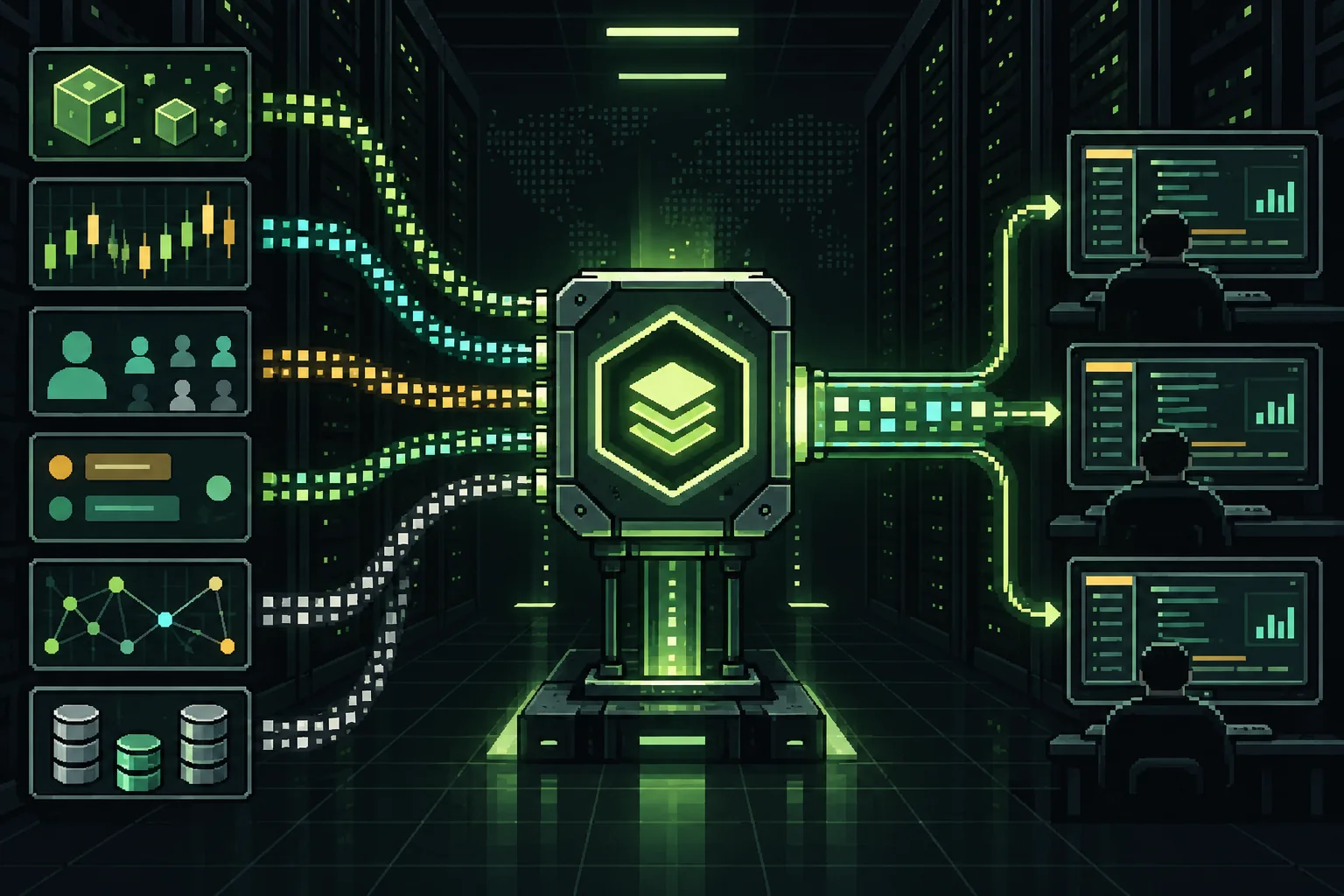
FOMOscan is a web dashboard for tracking social traders, but if you're building a bot, analytics tool, or trading dashboard, you need programmatic access to that data. This article compares API-first alternatives to FOMOscan, shows real pricing differences, and explains when you should build your own scraper versus paying for a fomoscan alternative that delivers on-chain wallet data through REST and WebSocket endpoints.
What FOMOscan Does (and Why Developers Need an API)
FOMOscan aggregates social trader activity from Twitter, Farcaster, and other platforms, then displays their on-chain wallets, holdings, and trade history in a web interface. Traders share screenshots of their FOMOscan profiles to prove their track record. Users browse leaderboards to find profitable wallets to copy.
The problem: FOMOscan is a website. You can click around and read data, but you cannot pull it into your application programmatically. If you're building a copy-trading bot, a portfolio tracker, or a dashboard that ranks traders by real PnL, you need an API that returns JSON over HTTP, not a web page you have to scrape.
A social trading data API solves this by exposing endpoints that return:
- A trader's verified wallets (Solana + EVM chains) from their social handle
- available trade history with entry/exit prices, timestamps, and PnL
- Current holdings and balances across multiple chains
- Ranked leaderboards by time window (24h, 7d, 30d, all-time)
- Real-time trade notifications via WebSocket
Without an API, you're stuck scraping HTML, reverse-engineering browser requests, or manually copying data. That approach breaks every time the site changes its layout and does not scale past a few requests per hour.
Why Look for a FOMOscan Alternative
FOMOscan serves a purpose as a public-facing dashboard, but developers hit three walls quickly:
Check programmatic access. Verify FOMOscan's current API documentation and account requirements before choosing an integration. For any provider, check which endpoints are available, how usage is billed, and whether the returned data covers your use case.
Rate limits and blocking. Scraping FOMOscan at scale gets your IP blocked. Even if you rotate proxies, you're playing cat-and-mouse with anti-bot measures. Every layout change breaks your parser. Every new CAPTCHA adds another workaround. You spend more time maintaining the scraper than building your product.
Self-reported vs. on-chain wallet data. Some social trading platforms let users manually enter their trades or connect wallets selectively. FOMOscan pulls on-chain data, which is better, but if you're scraping it, you cannot verify the data pipeline yourself. An API that reads directly from blockchain nodes gives you the same source of truth without the intermediary.
A fomoscan alternative built as a developer-first API gives you structured JSON responses, documented endpoints, predictable rate limits, and on-chain wallet data that you can trust. You pay for access instead of paying for scraper maintenance.
FOMO API: Verified Social Trading Data via REST + WebSocket
FOMO API (fomoapi.io) is a social trading data API that resolves a trader's Twitter or Farcaster handle to their on-chain wallets and serves PnL, holdings, and trade history through REST endpoints and a WebSocket feed. It covers Solana, Ethereum, Base, BSC, and three other EVM chains, so you get cross-chain data from one API key.
How It Works
You send a GET request with a social handle, and the API returns the trader's linked wallets plus their available trade history. Here's a real example:
GET https://fomoapi.io/v2/users/cobie
Response (simplified):
{
  "id": "cobie",
  "wallets": {
    "solana": ["7xK...abc"],
    "evm": ["0x123...def"]
  },
  "stats": {
    "total_pnl": 1847293.12,
    "total_trades": 432
  }
}
You can then pull the full trade list:
GET https://api.fomoapi.io/v2/users/cobie/positions?limit=100
Each trade includes token address, entry and exit price, timestamp, chain, and realized PnL. No guessing, no self-reported numbers. The API reads from the same on-chain transactions you could query yourself from an RPC node, but it handles wallet resolution, trade parsing, and cross-chain aggregation.
Key Endpoints
The full endpoint reference includes:
GET /v2/leaderboard/{window}: Ranked traders by PnL over 24h, 7d, 30d, or all-timeGET /v2/users/{handle}: Resolve a social handle to wallets and statsGET /v2/users/{handle}/positions: available trade history for a userGET /v2/users/{id}/balances: Current holdings across all chainsGET /token/{address}/holders: Who holds a specific token (useful for finding early buyers)WSS /ws/alerts: Real-time trade feed (subscribe to specific traders or tokens)
The WebSocket feed is critical for live copy-trading bots. You subscribe to a trader's ID, and every time they buy or sell, you get a JSON event within seconds:
{
  "type": "trade",
  "user": "cobie",
  "token": "0x...",
  "action": "buy",
  "amount": 5.2,
  "price": 0.034,
  "timestamp": 1704672345
}
This is the kind of infrastructure you'd have to build yourself if you scraped FOMOscan: wallet monitoring, trade detection, cross-chain indexing, and a pub/sub system. FOMO API gives you all of it through a single WebSocket connection.
The wallet behind the handle
The core value is resolution: a handle becomes an auditable address. The API resolves each handle to its real wallets, so you can audit a track record on-chain yourself. If they claim a 10x win but the blockchain shows they sold at a loss, the API reflects reality. This matters when you're deciding who to copy or which traders to feature in a leaderboard.
You can see the live trader leaderboard on the FOMO API site. It ranks traders by actual PnL over different time windows, with links to their trade history. No screenshots, no cherry-picking.
Pricing: FOMOscan vs. API Alternatives
Every data request requires an API key. Create a free key in the dashboard, then send authorization: Bearer YOUR_API_KEY.
Usage is metered in credits, and endpoints have different costs. A monthly credit allowance is not a fixed number of requests. See the pricing page for current credit allowances, endpoint costs, subscriptions, and optional prepaid payment methods. Use the API reference for response headers and rate limits.
The app-feed stream at /ws/alerts is separate from the on-chain stream at /ws/trades. Free keys receive an initial realtime app-feed trial, followed by a delay; paid keys receive the realtime app feed. The on-chain stream requires Growth or Scale. See the docs for current timing and access rules.
When comparing providers, verify their current API availability, coverage, and pricing directly. Compare the cost of your actual endpoint mix rather than an assumed flat request allowance.
Building Your Own Scraper: Hidden Costs
Scraping FOMOscan sounds free, but the real cost is time. Here's what you're signing up for:
Parsing HTML. You write a script that fetches the page, parses the DOM, and extracts trader stats. This works until FOMOscan changes a CSS class or wraps data in a new div. Then your scraper breaks, and you spend an afternoon debugging.
Anti-bot measures. FOMOscan uses Cloudflare or similar protections. After a few hundred requests, your IP gets blocked. You add a proxy pool. Then you add CAPTCHA solving. Then you add browser automation with Puppeteer. Each layer adds complexity and cost.
Rate limits. You cannot scrape fast enough to build a real-time feed. If you want to check 100 traders every minute, that's 6,000 requests per hour. You'll get blocked before you finish the first hour. You back off to once every 10 minutes, and now your data is stale.
No historical data. Scraping gives you a snapshot of what's on the page right now. If you want a trader's available trade history from six months ago, you need to have been scraping continuously. An on-chain trading data API stores historical trades and lets you query them on demand.
No WebSocket. Scraping is pull-based. You poll the site every X seconds and hope you catch new trades. A WebSocket feed is push-based. The API pushes each trade as FOMO publishes it, so you never poll.
If you're building a proof of concept or a personal tool, scraping might work. If you're building a product that other people depend on, you need an API. The cost of downtime, stale data, and maintenance hours exceeds the cost of a $49.99/month API within the first month.
Choosing the Right Solution for Your Use Case
Here's when each approach makes sense:
Use FOMOscan directly if you just want to browse traders manually or share a profile link. It's a good public dashboard, not a data source for applications.
Use a social trading data API (like FOMO API) if you're building:
- A copy-trading bot that mirrors a trader's buys and sells in real time
- A portfolio tracker that aggregates holdings across multiple wallets and chains
- A leaderboard or ranking system for your community
- An analytics dashboard that shows PnL trends, traded volume, and token performance
- A notification system that alerts users when a specific trader makes a move
The API handles wallet resolution, trade parsing, and cross-chain indexing. You focus on your product logic.
Build your own indexer if you have very high volume (millions of requests per day), need custom data transformations, or want to own the entire stack. Expect to spend $1,000+ per month on infrastructure and ongoing dev time.
Scrape as a last resort if you have no budget, very low volume, and can tolerate downtime. Be ready to rewrite your scraper every few months.
For most developers, a trader leaderboard API or wallet tracking API is the right balance of cost, speed, and reliability. You get on-chain wallet data, real-time updates, and predictable pricing without the maintenance burden.
Getting Started with FOMO API
If you're looking for a fomoscan alternative that gives you programmatic access to verified social trading data, FOMO API is the fastest path from idea to production.
- Get an API key. Create a free key in the dashboard. Include it on every data request.
- Read the docs. The FOMO API documentation shows every endpoint, parameter, and response shape.
- Test an endpoint. Try
GET /v2/leaderboard/7dto pull the top traders from the past week. You'll get back a JSON array with PnL, traded volume, and trade counts. - Subscribe to the WebSocket. Connect to
wss://api.fomoapi.io/ws/alerts, subscribe to a trader's ID, and start receiving live trade events. - Check pricing tiers if you need higher rate limits or need a larger monthly credit allowance.
The API covers Solana and EVM chains (Ethereum, Base, BSC, and more), so you get cross-chain data from one integration. No need to manage multiple RPC providers or write chain-specific parsers.
If you're building a tool that depends on social trading data, an API is not optional. Scraping does not scale, and building your own indexer is expensive. A fomoscan alternative like fomoapi.io gives you verified, real-time data through REST and WebSocket endpoints, with transparent pricing and zero maintenance. You can prototype in an afternoon and scale to production without rewriting your data layer.
Ship on fomo.family trader data
Both-chain wallets, PnL and holdings, plus two live streams: the app feed on every plan, the on-chain stream on Growth. One API.
Get an API key