Thesis Data
Detecting Memecoin Narratives Early with Trader Theses
A thesis is the written WHY behind a trade. Watching theses converge across many traders on a coin reveals a narrative forming early. This guide shows how to use /v2/thesis/token/{mint} and the global /v2/thesis feed to detect memecoin narratives before the chart makes them obvious.
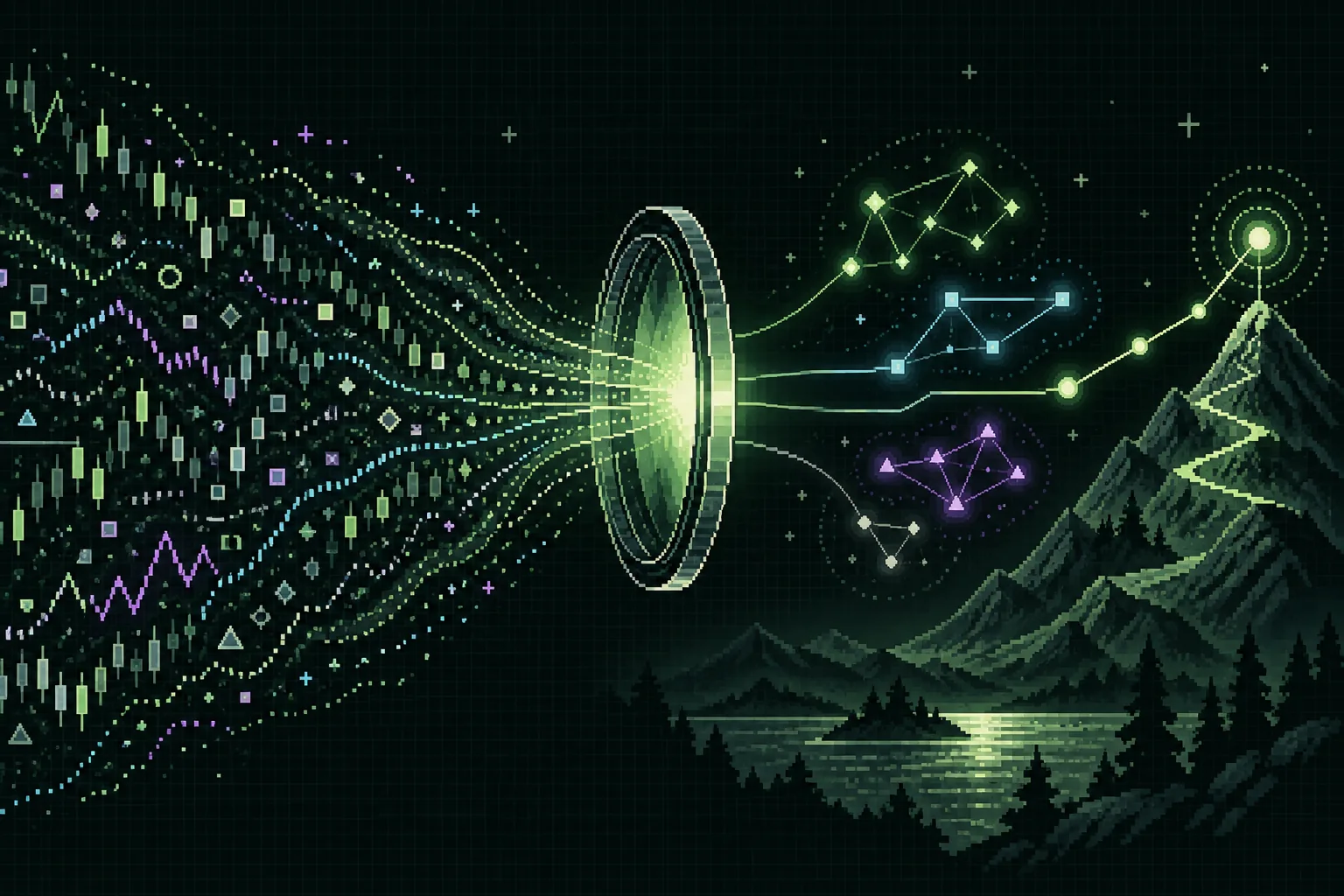
A thesis is the written reasoning a trader attaches to a trade. It is the WHY behind a position: the reason someone bought this specific coin at this specific time. On the fomo.family app, traders record these notes alongside their trades. fomoapi.io captures that data and exposes it through a plain HTTP API, so you can read a coin's theses the same way you would read its price history.
Price tells you that money moved. A thesis tells you what the person moving it believed. When you watch theses form across many independent traders on the same coin, you can often see a narrative taking shape before it fully prices in. That is the core of memecoin narrative detection: reading the collective reasoning, not just the chart.
This post walks through how to pull theses for a single token, how to watch the global feed for new reasoning, and how to turn raw notes into an early read on where attention is heading. Everything here uses the free tier at https://api.fomoapi.io, which allows 250,000 credits a month. fomoapi.io is an independent project and is not affiliated with fomo.family.
Why a thesis is different from a trade
A trade is a number. It says a wallet swapped some SOL for some token. It does not tell you whether the buyer thinks the coin is a two-hour scalp or a week-long story.
A thesis fills that gap. When a trader writes "new dev, same team that shipped the last runner" or "CT is starting to talk about the cat meta again," you learn the frame they are operating in. One note is an opinion. Ten notes from ten different traders, all circling the same idea, is a narrative forming in real time.
Narratives are what actually drive memecoin cycles. A coin rarely runs because of its fundamentals. It runs because a shared story spreads: a meta (cats, politics, a specific launchpad), a person, a recurring joke. If you can see that story assembling in the reasoning of active traders, you get a head start on the crowd that is only watching candles.
Pull every thesis on a single coin
The most direct query is all theses recorded against one mint. Use the token's mint address as the path parameter.
curl -s "https://api.fomoapi.io/v2/thesis/token/9BB6NFEcjBCtnNLFko2FqVQBq8HHM13kCyYcdQbgpump" \
  | jq '.theses[] | {handle: .trader.handle, thesis: .text, ts: .created_at}'
A trimmed response looks like this:
{
  "mint": "9BB6NFEcjBCtnNLFko2FqVQBq8HHM13kCyYcdQbgpump",
  "count": 14,
  "theses": [
    {
      "trader": { "handle": "soltrader", "id": "u_8842" },
      "text": "same art style as the last two runners from this deployer, buying the reflex bounce",
      "created_at": "2026-08-27T14:02:11Z"
    },
    {
      "trader": { "handle": "degenmap", "id": "u_2290" },
      "text": "cat meta is back on CT today, this one has the cleanest chart of the batch",
      "created_at": "2026-08-27T14:19:40Z"
    }
  ]
}
Two things matter here beyond the text. First, count gives you the raw volume of reasoning attached to the coin, which tends to rise before or alongside a move. Second, each thesis carries the trader who wrote it, so you can weight a note by that trader's track record instead of treating every opinion equally.
Read the text fields together and the shared frame usually jumps out. In the sample above, two unrelated traders both reference the same idea ("cat meta," "same deployer"). That overlap is the signal. A single clever note is noise. Convergence is narrative.
Watch the global feed for reasoning as it lands
Detecting a narrative early means you cannot wait until a coin is already obvious. The recent global feed returns theses across all tracked coins as they are recorded, which lets you catch a story while it is still forming on coins you were not watching.
curl -s "https://api.fomoapi.io/v2/thesis?limit=50" \
  | jq '.theses[] | {mint: .mint, handle: .trader.handle, thesis: .text}'
{
  "count": 50,
  "theses": [
    {
      "mint": "7pTq...bonk",
      "trader": { "handle": "chartsnipe" },
      "text": "third coin today riffing on the same politician clip, meta forming",
      "created_at": "2026-08-27T15:41:02Z"
    },
    {
      "mint": "3xR9...pump",
      "trader": { "handle": "soltrader" },
      "text": "same clip, different ticker, this is the one with volume",
      "created_at": "2026-08-27T15:44:55Z"
    }
  ]
}
The pattern to look for is the same word or idea appearing on different mints inside a short window. When several traders independently reach for the same reference across multiple coins, that is a meta spreading, not a single coin pumping. Poll this feed on a short interval, group incoming theses by keyword, and you have a simple detector for narratives crossing coins.
A simple detection loop
You do not need anything heavy to act on this. A workable loop:
- Poll
/v2/thesisevery minute and keep the last few hours of notes in memory. - Tokenize each thesis and count recurring phrases (a meta name, a deployer, a person, a recurring joke).
- When a phrase crosses a threshold of distinct traders in a short window, flag it.
- For each flagged phrase, collect the mints it appeared on and call
/v2/thesis/token/{mint}on each to confirm the reasoning is genuinely convergent and not one person spamming. - Weight the flag by the leaderboard rank of the traders involved, so a narrative carried by traders with a real record ranks above one carried by unknown wallets.
That is the whole idea. The API gives you the raw reasoning; the detection is counting convergence and weighting it by who is doing the reasoning.
What the theses do and do not tell you
Theses are self-reported. A trader can write a note that does not match what they actually do, or write nothing at all on a position they care about. So treat theses as a leading qualitative signal, not proof. The right move is to cross-check: when a narrative shows up in the theses, confirm it against the trades and holdings on the same coins before you act on it.
The strength of the data is breadth and timing. You are reading the reasoning of many active traders at the moment they form it, in one place, without scraping. That is hard to assemble any other way, and it is the part that gives you a head start on a story before the chart makes it obvious to everyone.
Getting started
Every endpoint here is live on the free tier at https://api.fomoapi.io with a 60 request per minute limit, which is enough to poll the global feed once a second and still have room to fan out to per-coin lookups. Start with /v2/thesis to get a feel for the volume of reasoning flowing through, then use /v2/thesis/token/{mint} to go deep on any coin a narrative points you toward. Pair those with /v2/search?q= when you need to resolve a name or ticker to a mint first.
Ship on fomo.family trader data
Both-chain wallets, PnL and holdings, plus two live streams: the app feed on every plan, the on-chain stream on Growth. One API.
Get an API key